
Why Is My Air Conditioner Making A Loud Noise?
If your AC is making loud noise, you're not alone. Air conditioners naturally produce some sound, but a sudden increase in noise often points to a specific cause. Understanding the type of sound you're hearing can help identify the correct solution.
AC Making Loud Noise? Here's How To Tell
Most air conditioners make some noise during normal operation. A typical outdoor AC unit often produces between 70 and 80 decibels while running, which is comparable to spirited conversation or heavy traffic.
The more important question is whether the noise has changed. If your air conditioner has suddenly become louder than normal, that can indicate a mechanical problem, vibration issue, loose hardware, debris, or compressor wear.
Pay attention to the type of sound you’re hearing. Different noises often point to different causes and solutions.
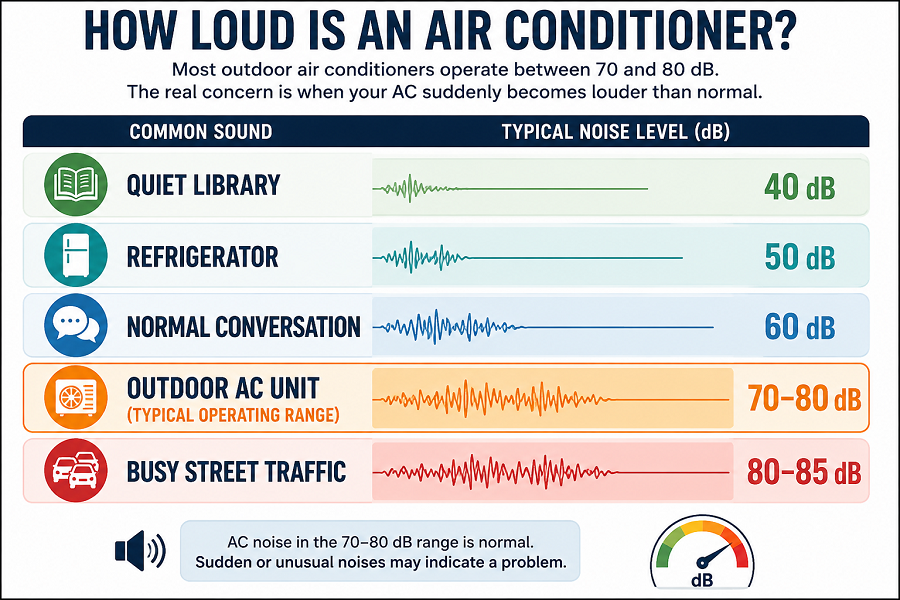
If your AC sounds normal but you’d like it to be quieter, see our guide on how to reduce air conditioner noise.
Common Causes Of A Loud Air Conditioner
If your AC unit is making a loud noise, the sound itself can provide valuable clues. Some noises are harmless and easily corrected, while others may indicate a failing component that requires professional repair.
Here are the most common causes of air conditioner noise and what each sound typically means.
Loose panels
or hardware
Symptoms:
- rattling
- buzzing
- vibrating
Loose access panels, fan guards, and mounting hardware are one of the most common causes of sudden AC noise. Fortunately, they are also among the easiest problems to fix.
Worn Fan
motor bearings
Symptoms:
- squealing
- grinding
Fix:
- repair or replace
Dirty Fan Blade
Symptoms:
- wobbling
- imbalance
Dirt buildup can throw a fan blade out of balance, causing vibration and excess noise during operation.
Compressor Noise
Symptoms:
- humming
- droning
- low-frequency vibration
Explain:
Even healthy compressors create noise.
This is where sound blankets help.
Refrigerant Or
Pressure Issues
Symptoms:
- hissing
- whistling
Hissing or whistling noises may indicate refrigerant leaks or pressure problems that should be inspected by an HVAC technician.
Failing Compressor
Symptoms:
- knocking
- banging
- loud buzzing
Explain:
Sound blankets won’t fix this.
Needs repair.
How To Reduce Air Conditioner Noise
1. Install An AC Sound Blanket
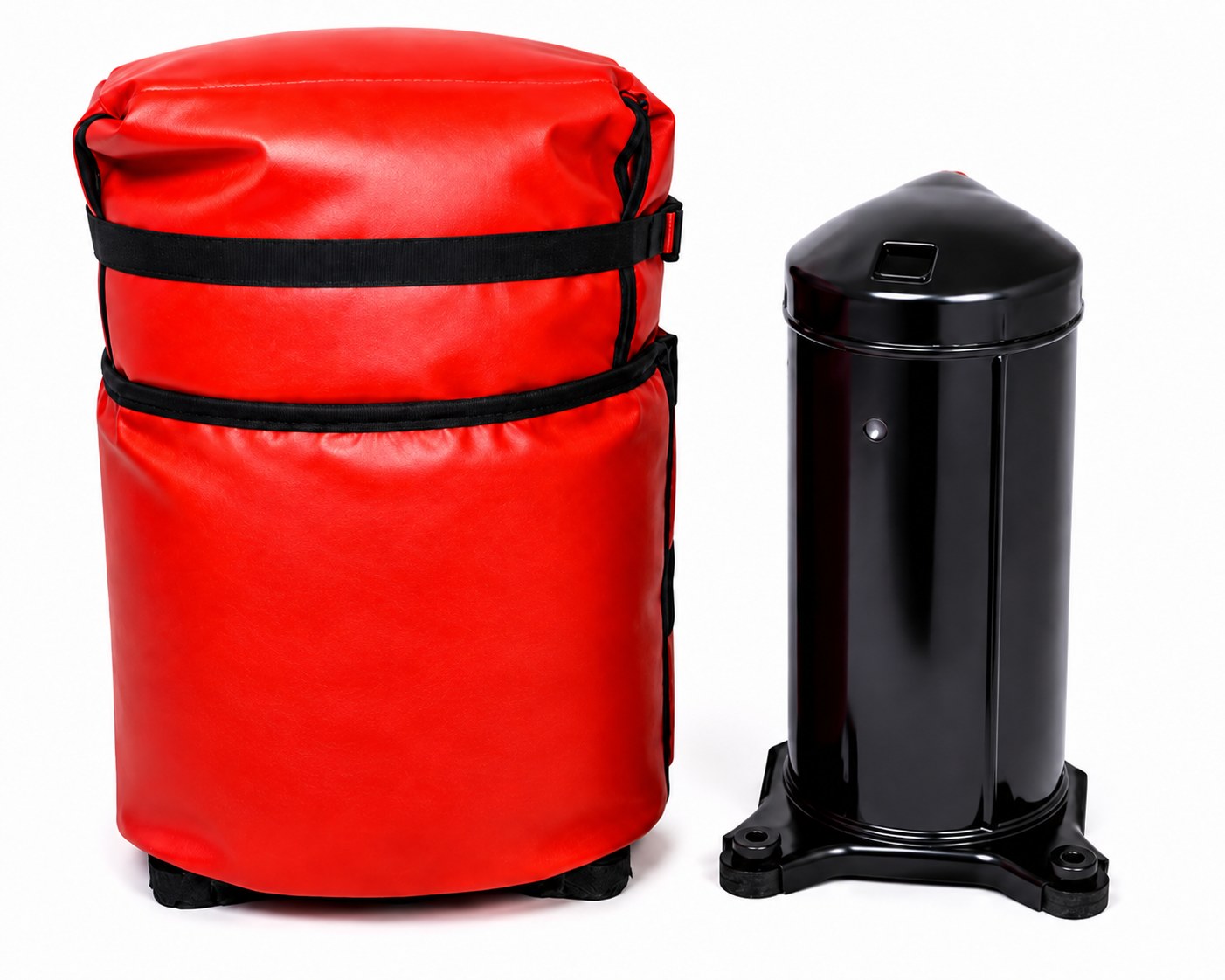
See our detailed AC Sound Blanket Comparison Test Results to compare the performance of different compressor blanket designs.
The compressor is typically the loudest component in an outdoor air conditioning unit. Even a properly functioning compressor creates a low-frequency hum while operating.
Because compressor noise is normal, repairs often aren’t necessary. Instead, many homeowners choose to reduce compressor noise with an AC sound blanket. Sound blankets wrap around the compressor shell and help reduce the amount of sound escaping into the surrounding area.
In our own testing, different compressor blanket designs produced dramatically different results. Some provided little measurable improvement, while others significantly reduced air conditioner compressor noise.
Link:
See our AC Sound Blanket Comparison Test Results
2. Install Vibration Isolation Pads
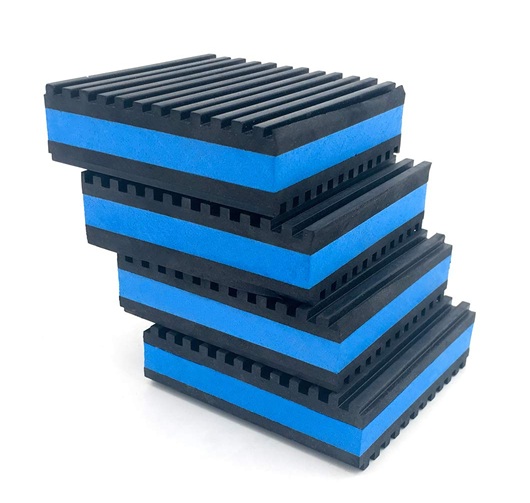
If your air conditioner is producing excessive vibration, vibration isolation pads can help reduce the amount of noise transferred into the surrounding structure.
These pads are installed beneath the outdoor condenser unit and help absorb vibrations before they travel into concrete pads, walls, decks, or nearby framing.
Vibration pads will not repair worn bearings, failing motors, or other mechanical problems. However, they can provide meaningful noise reduction while you decide whether to repair or replace the unit.
3. Install A Soft Start
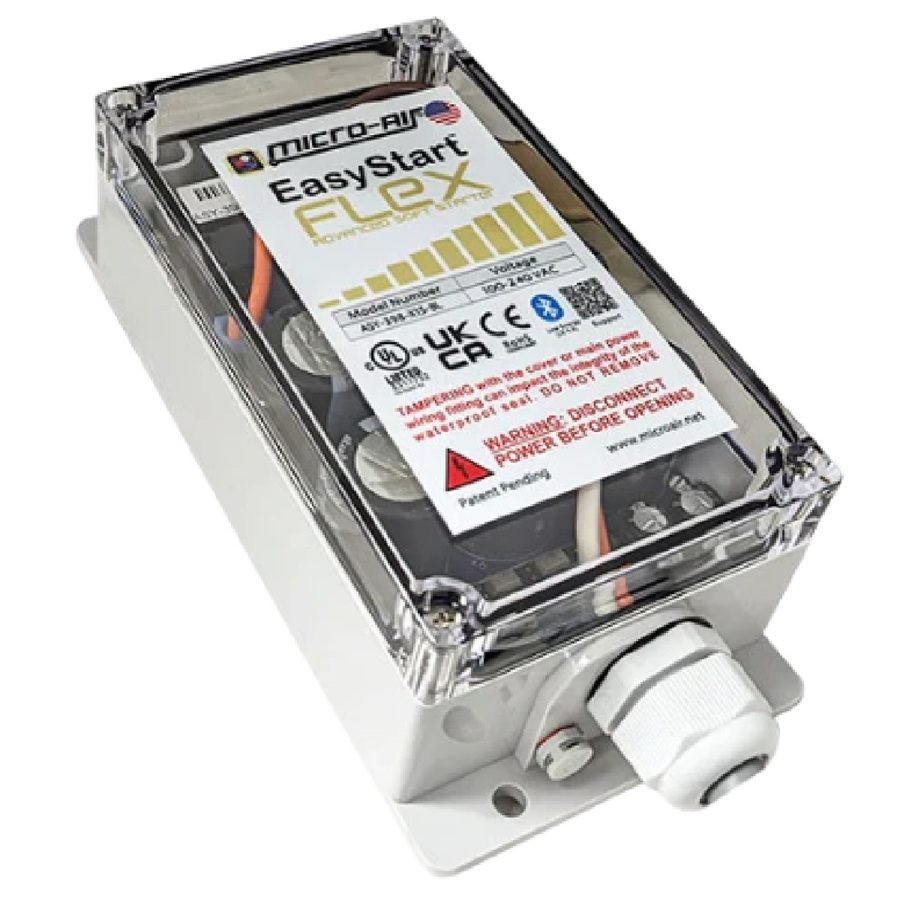
Some air conditioners produce a loud thump, bang, or clunk when the compressor starts.
A soft start device reduces the electrical surge during startup, allowing the compressor to start more gradually. This can reduce startup noise while also reducing stress on electrical components.
Soft starts are most effective when the noise occurs during startup. They typically do not reduce constant compressor hum while the system is running.
4. Build A Noise Barrier Or Fence
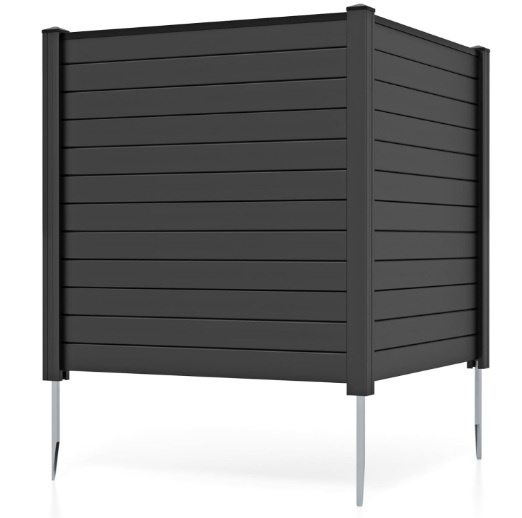
Noise barriers can help block sound from traveling directly toward patios, decks, windows, and neighboring properties.
Options include:
- Decorative privacy screens
- Landscaping
- Purpose-built noise barriers
- Fencing designed for HVAC equipment
Any barrier must allow adequate airflow around the condenser unit. Blocking airflow can reduce efficiency and potentially damage the system.
Noise barriers work best when combined with other solutions such as vibration isolation or compressor sound blankets.
5. Replace The Unit
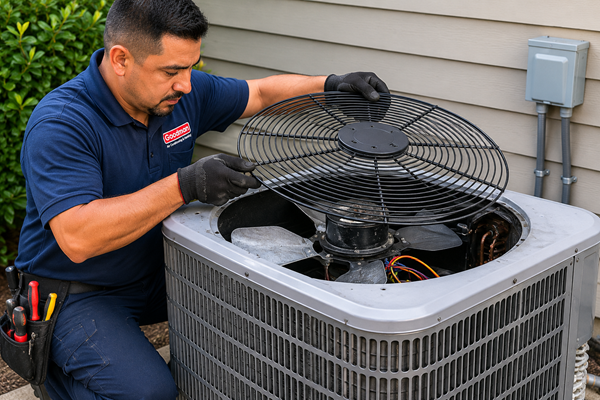
- compressor failing
- 15+ years old
- repair costs high
If your air conditioner is over 15 years old, requires frequent repairs, or has a failing compressor, maintenance, or even replacement may be the most cost-effective long-term solution. Modern systems are often quieter, more efficient, and less prone to vibration issues than older equipment.
What Does The Noise Sound Like?
Which Noise Reduction Method Works Best?
Noise |
Likely Cause |
|---|---|
| Buzzing | Loose panel, capacitor, electrical issue |
| Humming | Normal compressor operation |
| Grinding | Fan motor bearings |
| Clicking | Relay or startup components |
| Hissing | Refrigerant leak |
| Banging | Loose internal component |
| Screeching | Fan motor failure |
Goal |
Best Solution |
|---|---|
| Reduce compressor hum | AC sound blanket |
| Reduce vibration noise | Isolation pads |
| Reduce startup thump | Soft start |
| Block sound from neighbors | Noise barrier |
| Reduce overall AC noise | Sound blanket + barrier |
| Failing compressor | Repair or replace |
FAQ
Why is my AC making a loud buzzing noise?
A loud buzzing noise is commonly caused by loose hardware, electrical issues, vibrating panels, or compressor problems. If the buzzing suddenly appeared, inspect the unit for loose components and consider having it inspected by an HVAC technician.
Why is my outside AC unit making noise?
Outdoor AC units normally produce some noise while running. However, excessive humming, rattling, grinding, banging, or vibration may indicate a maintenance issue that should be investigated.
Why is my air conditioner suddenly louder than normal?
If your air conditioner has suddenly become louder than normal, it usually indicates that something has changed within the system. Common causes include loose hardware, vibrating panels, debris caught in the fan, worn motor bearings, compressor wear, or refrigerant-related issues. While some causes are minor and easy to correct, others may require professional repair. Pay attention to the type of sound you’re hearing, as rattling, grinding, humming, hissing, and banging noises often point to different problems.
Is it safe to run a noisy air conditioner?
That depends on the type of noise. Normal compressor hum and fan noise are generally harmless. However, grinding, banging, squealing, or sudden loud buzzing can indicate a mechanical or electrical problem that may worsen if ignored. Continuing to run an air conditioner with a serious fault can lead to more expensive repairs or even compressor failure. If the noise is new, unusually loud, or accompanied by reduced cooling performance, it’s best to have the unit inspected.
Can an AC sound blanket reduce compressor noise?
Yes. Compressor sound blankets reduce the amount of sound escaping from the compressor shell. They are most effective against humming, droning, and low-frequency compressor noise.
Do vibration pads work?
Yes. Vibration isolation pads can be very effective when noise is being transmitted from the air conditioner into the concrete pad, deck, wall, or surrounding structure. They work by absorbing vibration before it travels through the building materials and creates additional noise.
However, vibration pads do not repair the underlying problem. If the unit has worn bearings, a failing motor, loose components, or compressor issues, the source of the noise will still exist. In those situations, vibration pads can often reduce the perceived noise while you decide whether to repair or replace the unit. They work best for vibration-related noise and are often used alongside other solutions such as AC sound blankets.
When To Call An HVAC Technician
Call a professional if you hear:
- Grinding
- Metal-on-metal noises
- Refrigerant hissing
- Loud banging
- Repeated breaker trips