
AC Unit Making Buzzing Noise? 4 Common Causes & Fixes
A buzzing noise can be completely normal—or it can be a sign that something needs attention. This guide will help you determine whether the sound is coming from your compressor, electrical components, vibration, or a developing mechanical issue.
AC Unit Making Buzzing Noise? The 4 Most Common Causes
Not all buzzing noises mean the same thing.
Some buzzing sounds are completely normal and come from the compressor while the air conditioner or heat pump is running.
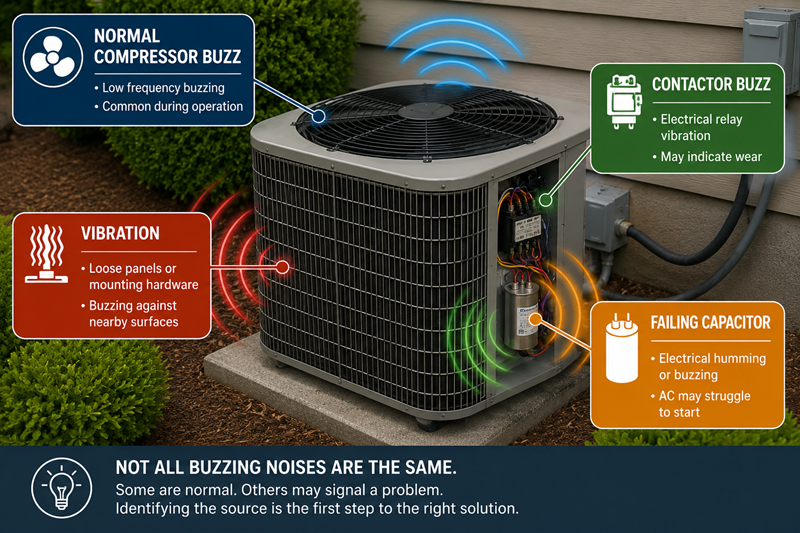
Others can be caused by loose hardware, vibration, electrical components, or parts that may need service.
Identifying the source of the buzzing noise is the first step toward solving it.
While many homeowners assume a buzzing noise means the air conditioner is failing, that isn’t always true.
Some buzzing sounds are completely normal and come from the compressor operating as designed. Others can indicate loose hardware, vibration, electrical issues, or a component beginning to wear out.
Identifying where the sound is coming from is often the fastest way to determine whether you need a repair or simply a noise reduction solution.
1. Normal AC Compressor Buzzing
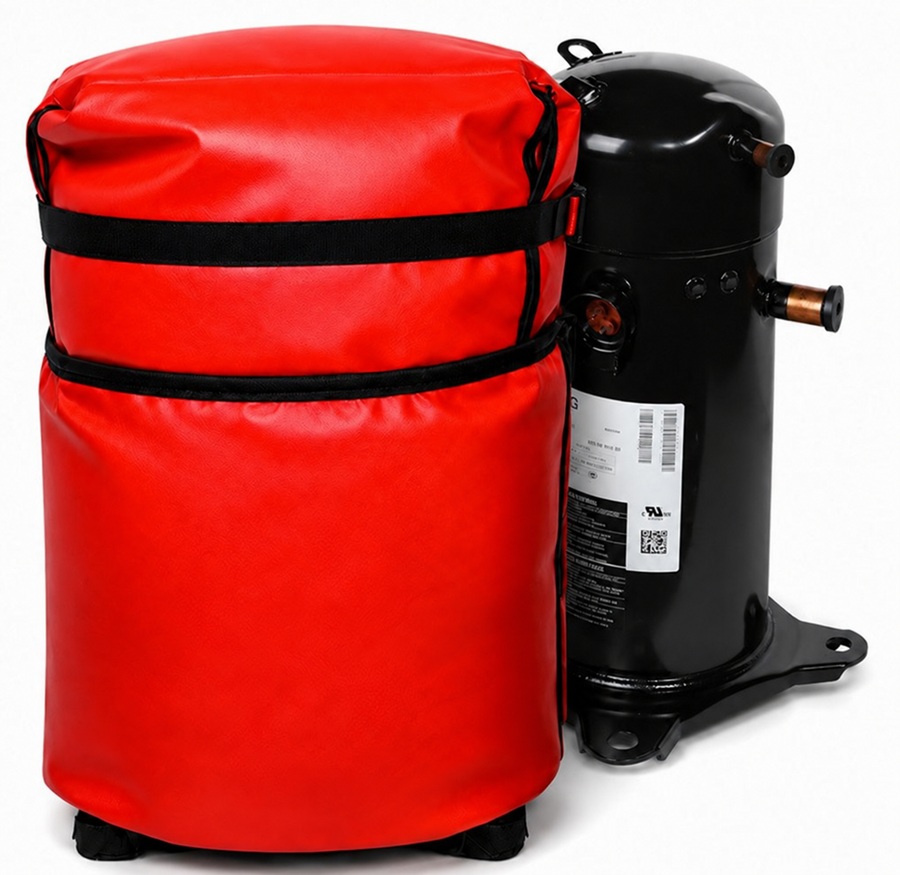
Many homeowners describe compressor operation as a buzzing sound.
Unlike a mechanical failure, this buzzing is often completely normal.
The compressor naturally creates low-frequency buzzing every time it runs.
And yes, this sound can get louder over time. So just because you might not have noticed the sound before, doesn’t mean there is something mechanically wrong.
Many homeowners trying to figure out why thier AC unit making buzzing noise are actually hearing normal compressor operation.
The compressor is responsible for circulating refrigerant through the system and naturally produces low-frequency vibration and sound.
This buzzing may become more noticeable as outdoor temperatures rise and the air conditioner runs longer cycles.
A compressor sound blanket helps reduce normal operating compressor noise without changing how the air conditioner or heat pump functions.
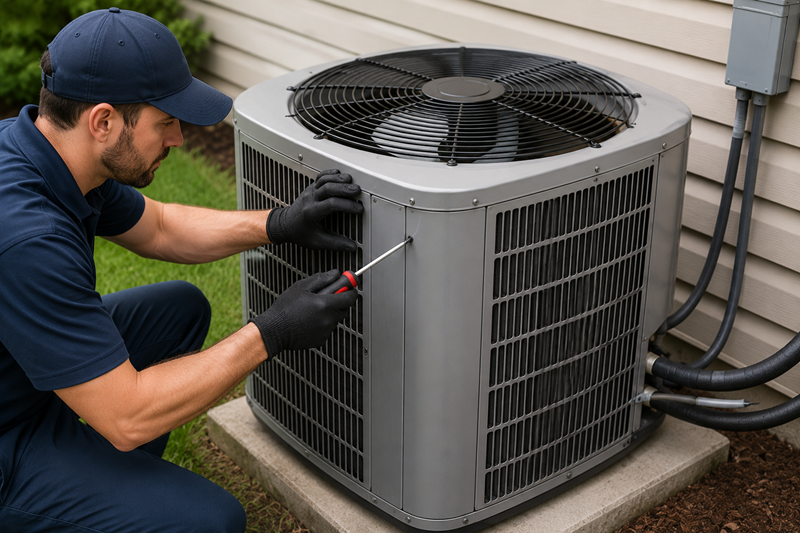
Vibrations can come from loose hardware, worn mounting surfaces, or the air conditioner itself transferring movement into surrounding structures.
Loose screws, panels, refrigerant lines, and mounting hardware can all create buzzing noises as they vibrate against surrounding surfaces.
These noises are often mistaken for compressor noise because both can sound like rattling or buzzing.
Vibrations may be heard through walls, decks, concrete pads, or nearby objects.
Sometimes the solution is as simple as going around the unit and tightening any screws you can find. Other times, a vibration dampener is needed.
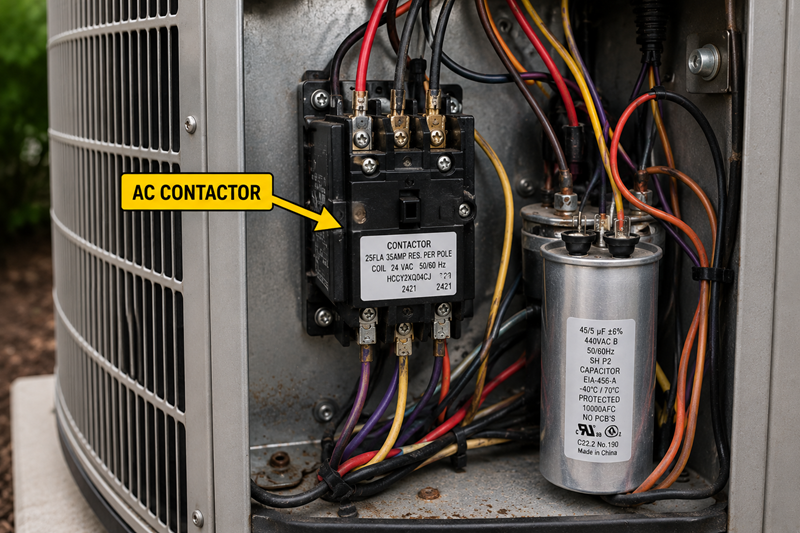
The contactor is an electrical switch that engages when the air conditioner starts. As it ages, it may begin producing a noticeable buzzing sound while energized.
While some contactor buzz is normal, excessive buzzing may indicate wear and should be inspected.
Homeowners often describe this sound as coming from the electrical compartment rather than the compressor itself.
If the buzzing suddenly becomes louder or is accompanied by intermittent operation, the contactor may need replacement.
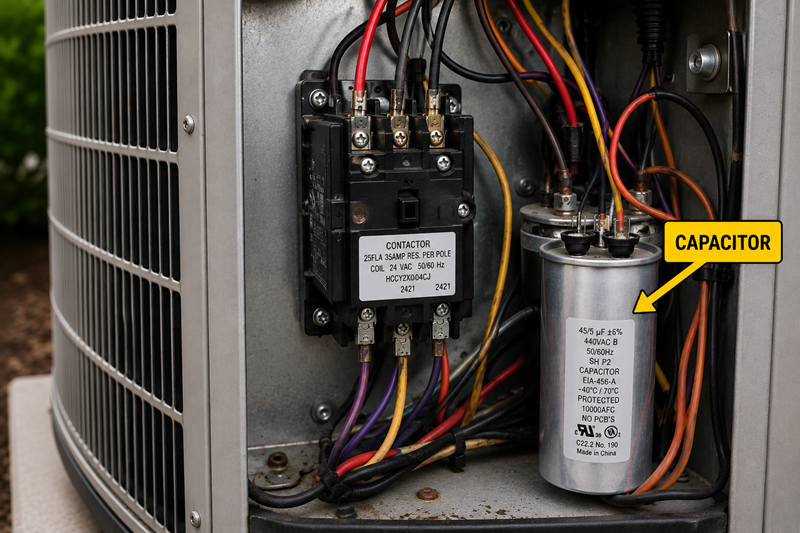
A failing capacitor can produce humming or buzzing sounds and may prevent the compressor or fan from starting properly.
If your AC struggles to start or repeatedly clicks and buzzes, a capacitor may be the cause.
Unlike normal compressor buzzing, capacitor-related noises are often accompanied by reduced performance or startup problems.
In some cases the outdoor unit may buzz without fully starting.
Conditions That Make Buzzing Worse
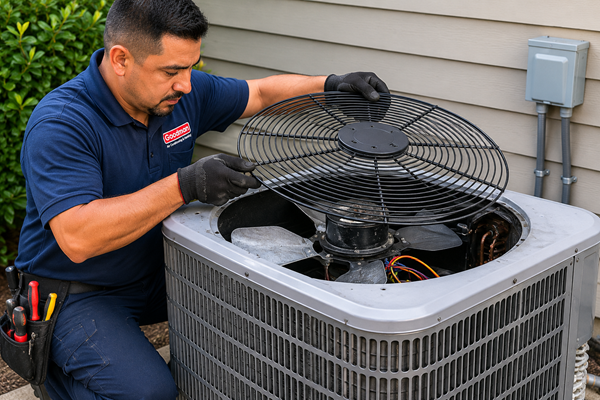
Dirty coils don’t usually create a new type of noise. Instead, they restrict airflow and force the air conditioner to work harder, making compressor, fan, and vibration noises more noticeable.
Regular maintenance, including properly cleaning your air conditioner condensor coils is part of the U.S. Department of Energy air conditioner maintenance recommendation.
Loose panels, dirty coils, restricted airflow, and aging electrical components can all make buzzing sounds more noticeable.
Hot weather can also make compressor buzzing more noticeable because the air conditioner runs longer cycles and operates under heavier load.
WHAT TYPE OF BUZZING ARE YOU HEARING?
Deep steady buzz while running?
Start with the compressor.
Normal compressor buzzing is one of the most common causes of an AC unit making a buzzing noise.
Buzzing from the cabinet?
Check for vibration issues.
Loose screws, panels, and refrigerant lines can create a noticeable buzzing sound.
Buzzing from the electrical compartment?
Inspect the contactor.
Electrical buzzing often comes from worn contactors or relays.
Buzzing and trouble starting?
Check the capacitor.
A weak capacitor may cause repeated buzzing and clicking during startup.
Some AC buzzing noises are completely normal. Others may indicate vibration issues, electrical problems, or worn components.
Understanding the source of the buzzing sound is the fastest way to determine whether you need a repair—or simply a noise reduction solution.
But before deciding on a sound blanket, please read about AC compressor blanket pros and cons to make sure it is the right decision for you.